

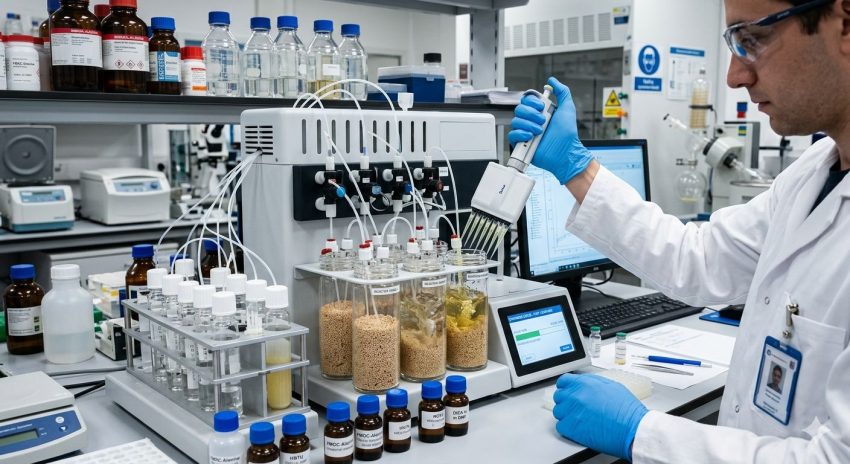
Peptides are small chains of amino acids that help researchers understand many important biological processes. Their carefully arranged structures allow scientists to study how proteins work and how cells respond to different signals. Researchers use https://certified-pep.com/ to explore relevant peptide information and research resources. Reliable laboratory methods help create specific sequences for controlled experiments. These materials support scientific learning by offering useful ways to examine molecular activity and collect clear findings that guide future investigations.
Understanding Peptide Molecular Structures
Peptides contain amino acids connected through chemical bonds. Their order determines important features that influence interactions with other molecules during laboratory studies.
Supporting Laboratory Research Goals
Scientists select suitable peptide sequences to investigate biological functions. Careful planning improves experiment quality and helps produce useful findings.
Improving Experimental Accuracy
Accurate preparation helps researchers obtain consistent materials. Controlled methods reduce unwanted changes while supporting reliable comparisons across repeated laboratory tests.
Quality Control During Production
Quality control helps confirm whether prepared materials meet research requirements. Regular checks support dependable results across laboratory activities.

- Check sample identity.
- Measure purity levels.
- Review possible impurities.
- Maintain clear records.
- Store samples correctly.
Advancing Molecular Knowledge
Research teams study peptide behavior to understand cellular signals. Such findings expand scientific knowledge and support further investigation into complex biological systems.
Creating Specific Research Materials
Custom sequences help researchers address focused questions. Each prepared sample can match particular study requirements while maintaining suitable laboratory standards.
Strengthening Research Methods
Careful quality checks help identify impurities. Verified samples improve confidence in observations while supporting accurate records throughout scientific investigations.
Safe Laboratory Handling Practices
Proper handling protects sample quality while supporting responsible laboratory work. Clear procedures reduce contamination risks during preparation and storage.
- Wear suitable protective equipment.
- Keep work areas clean.
- Use labeled containers.
- Follow handling instructions.
- Dispose of waste properly.
Peptide research offers valuable tools for examining molecular activity and biological connections. Scientists can improve study quality through careful planning and reliable preparation. Reviewing resources at https://certified-pep.com/ may help researchers identify relevant information before selecting materials. Combining suitable sequences with clear testing methods supports meaningful observations. Consistent quality checks also help teams interpret findings accurately. These practices encourage responsible research and create a stronger foundation for future scientific discoveries.
FAQs
What Are Peptides Used For In Research?
Peptides help scientists examine protein interactions and cellular signals. They also support studies of molecular structure and biological processes.
Why Does Peptide Purity Matter?
High purity reduces unwanted substances in samples. This helps researchers interpret experimental findings with greater confidence and consistency.
How Are Research Peptides Prepared?
Scientists select amino acid sequences and use suitable synthesis methods. They then assess sample identity and purity before laboratory use.